maccmike
|
| posted on 13/3/13 at 12:10 PM |

|
|
Uprights on wrong side vs Castor
Long story short - my front hubs/uprights are on the wrong sides.
steering rack is in front of the axle line with absolutely no chance of moving it back.
therefore I only had one option when fitting the hubs etc,
self centerring and high speed stability isnt bad but could be better.
question is;
can I compensate for this by adding in more castor by remaking the top arms so the top ball joint is more rearward?
[Edited on 13/3/13 by maccmike]
|
|
|
|
|
nick205
|
| posted on 13/3/13 at 01:44 PM |
|
|
What front uprights are you using....I'm guessing they must be from something FWD if they're fitted backwards and the rack is forward of
the axle?
If so, I would imagine the steering geometry (Ackerman angles?) might be adversely affected already.
Could you change to RWD uprights designed for rack forward use?
Any photos?
|
|
|
maccmike
|
| posted on 13/3/13 at 02:50 PM |
|
|
Hi, yes fwd.
I dont think the ackerman is my main worry, 1 I can put up with bit of understeer and 2 a bit of toe out compensates.
I wanted to keep the same wheels so I opted for v40 uprights as they had the same pcd.
As Iv already made the sunspension, if I change hubs now Il have to remake it all and I really dont have time or money.
|
|
|
MikeRJ
|
| posted on 13/3/13 at 04:13 PM |
|
|
Caster and camber is determined by the wishbones rather than the upright, so it should make no difference. You now have anti-Ackerman steering
however.
|
|
|
maccmike
|
| posted on 13/3/13 at 04:16 PM |
|
|
quote:
Originally posted by MikeRJ
Caster and camber is determined by the wishbones rather than the upright, so it should make no difference. You now have anti-Ackerman steering
however.
Hi, as stated the ackerman is the least of my worries.
|
|
|
MikeRJ
|
| posted on 13/3/13 at 04:32 PM |
|
|
quote:
Originally posted by maccmike
quote:
Originally posted by MikeRJ
Caster and camber is determined by the wishbones rather than the upright, so it should make no difference. You now have anti-Ackerman steering
however.
Hi, as stated the ackerman is the least of my worries.
So how much castor do you currently have?
|
|
|
maccmike
|
| posted on 13/3/13 at 05:47 PM |
|
|
approx 8 neg degrees, was 6, gave it a bit more which helped a bit.
I know that should be enough. can I have too much?
I only noticed my error when reversing and the self centering was perfect, had a sinking feeling instantly haha.
|
|
|
maccmike
|
| posted on 13/3/13 at 07:01 PM |
|
|
bump just to keep interest
|
|
|
Andy S
|
| posted on 13/3/13 at 08:24 PM |
|
|
For a bit of info - The Lotus Seven used Triumph uprights used opposite way around as did the Ginetta G4 and probably quite a few others - they used
an upside down LHD mini rack to get the correct rack drive option - Anti Ackerman is a desirable feature for high speed cornering.
Uprights on my G27 are set for zero Ackerman rather than positive or negative - Interesting scrub during turning - you cannot actually move the car
with full lock but on the road its superb.
You also need to focus a little more on the geometry to give you positive trail rather than just rely on the caster angle and also look into the scrub
radius - the use of FWD hubs in a RWD application has disadvantages as the two have very different requirements mainly due to reduce torque steer
tendancies with FWD but it also removes the "feel" when used in RWD.
I am sure its just descriptive error but Caster trail should be positive not negative - You may also need a great deal more caster if the KPI on the
upright is only small.
Also looks in your avatar that you have about 2 degrees of chassis rake - you may also want someone to see if the rear chassis is being lifted when
under drive increasing that rake which would be removing the caster further - Unless you are measuring dynamic caster rather than measured caster
against the chassis
[Edited on 13/3/13 by Andy S]
|
|
|
maccmike
|
| posted on 13/3/13 at 09:23 PM |
|
|
Thats a great response thanks and very informative.
Are you suggesting I add more castor?
|
|
|
MikeRJ
|
| posted on 13/3/13 at 09:25 PM |
|
|
quote:
Originally posted by maccmike
approx 8 neg degrees, was 6, gave it a bit more which helped a bit.
I know that should be enough. can I have too much?
As Andy says, castor is usually a positive angle, which means the balljoint/pivot at the top of the upright is further toward the back of the car than
the bottom pivot. 8 degrees positive should be sufficient, and yes you can have too much. Positive castor makes the outside wheels gain negative
camber in a turn, which is usually a good thing but only to a point.
Have you also measured Steering axis inclination (SAI/KPI)? This also adds to the self centering effect, and depending on how you converted the
uprights for a double wishbone application, you may not have very much at all.
|
|
|
maccmike
|
| posted on 13/3/13 at 09:31 PM |
|
|
Hi Mike, the KPI should be the same as the donor, although thats only a guess not a fact.
|
|
|
whitestu
|
| posted on 13/3/13 at 09:36 PM |
|
|
quote:
I only noticed my error when reversing and the self centering was perfect, had a sinking feeling instantly haha.
My MK self centres perfectly in reverse as well!
|
|
|
maccmike
|
| posted on 13/3/13 at 09:42 PM |
|
|
whats it like going forwards?
|
|
|
britishtrident
|
| posted on 14/3/13 at 08:04 AM |
|
|
KPI is fixed relative to camber ie increase the negative camber and KPI increases by the same amount.
It is possible to bend the steering arms outwards a bit but it takes a lot of concentrated local heat ie the pre-heat flame of an oxy-acetylene
cutting torch (concentrated on the compression side of the bend) followed by a water quench and re-heat to a lower temperature. i would then
strongly advise getting them crack tested.
[I] “ What use our work, Bennet, if we cannot care for those we love? .”
― From BBC TV/Amazon's Ripper Street.
[/I]
|
|
|
britishtrident
|
| posted on 14/3/13 at 08:16 AM |
|
|
quote:
Originally posted by Andy S
For a bit of info - The Lotus Seven used Triumph uprights used opposite way around as did the Ginetta G4 and probably quite a few others - they used
an upside down LHD mini rack to get the correct rack drive option - Anti Ackerman is a desirable feature for high speed cornering.
Uprights on my G27 are set for zero Ackerman rather than positive or negative - Interesting scrub during turning - you cannot actually move the car
with full lock but on the road its superb.
You also need to focus a little more on the geometry to give you positive trail rather than just rely on the caster angle and also look into the scrub
radius - the use of FWD hubs in a RWD application has disadvantages as the two have very different requirements mainly due to reduce torque steer
tendancies with FWD but it also removes the "feel" when used in RWD.
I am sure its just descriptive error but Caster trail should be positive not negative - You may also need a great deal more caster if the KPI on the
upright is only small.
Also looks in your avatar that you have about 2 degrees of chassis rake - you may also want someone to see if the rear chassis is being lifted when
under drive increasing that rake which would be removing the caster further - Unless you are measuring dynamic caster rather than measured caster
against the chassis
[Edited on 13/3/13 by Andy S] [/quote
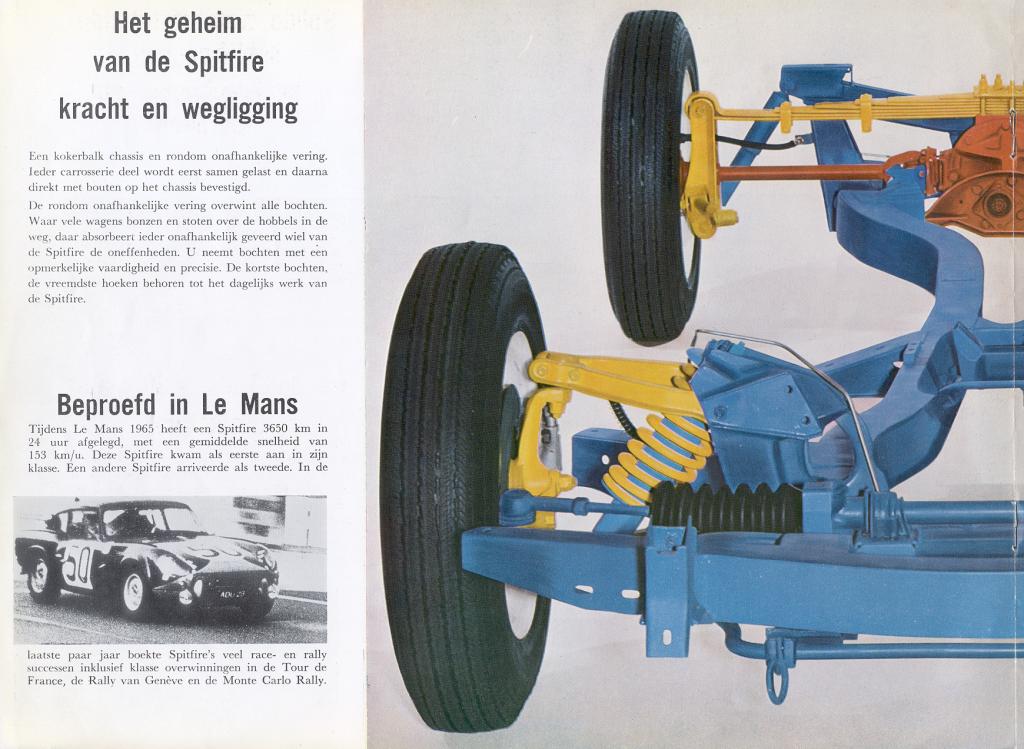
Proper Triumph uprights have bolt on steering arms and calliper brackets they can be configured for steering arms in front (as on the Triumph
Herald/GT6 and various Lotus TVR) or behind the axle centreline.
Some later Heralds and Spitfires used a cheaper rather nasty design with steering arms and calliper brackets cast as one unit with the swivel hub.
[Edited on 14/3/13 by britishtrident]
[I] “ What use our work, Bennet, if we cannot care for those we love? .”
― From BBC TV/Amazon's Ripper Street.
[/I]
|
|
|
Sam_68
|
| posted on 14/3/13 at 08:31 AM |
|
|
quote:
Originally posted by Andy SFor a bit of info - The Lotus Seven used Triumph uprights used opposite way around ....
The Lotus/Caterham Seven (and the Ginetta) uses the Triumph uprights the same way round as the Triumph, with the rack in front of the axle line, and
uses a Triumph rack (with lock stops, IIRC)?

I'm with others who have said that Ackermann geometry is your biggest worry - I don't think you should be simply dismissing a large amount
of negative Ackermann (which is quite different from parallel steering - zero Ackermann).
As has been said, caster is simply a function of your top and bottom ball joint positions so is set by the wishbones, not the uprights, but if I were
you I'd also be checking very carefully the bump steer and steering rack geometry - by tilting the uprights the wrong way, you're
altering the relationship with the steering rack. You will certainly need to change the rack height to work with the new arrangement, and may need to
also adjust the rack length to minimise bump steer.
|
|
|
maccmike
|
| posted on 14/3/13 at 01:40 PM |
|
|
Thanks for the replies.
Iv removed triumph uprights as I wasnt comfortable with the trunnion set up, additionally the wishbones mounted in the cockpit which was my biggest
worry if I had a prang.
The ackerman is not an issue, this can be resolved with 2mm of toe out, not ideal but works.
Bump steer can be improved/resolved once other geometry has been resolved.
What I want is self centering and therefore high speed stability.
|
|
|
Sam_68
|
| posted on 14/3/13 at 02:12 PM |
|
|
quote:
Originally posted by maccmike ... this can be resolved with 2mm of toe out, not ideal but works.
Except that you are complaining that high speed stability isn't good... well, high speed stability won't be good, if you are
setting the tracking to toe out. Toe out is usually employed to deliberately make cars very 'pointy', when you want them to feel very
nimble for hillclimbing or whatever. It'll tend to wander and tramline and generally feel a little bit directionally unstable in a straight
line.
In any case, 2mm of toe out won't be nearly enough to compensate for the negative slip angle differential you'd be getting with 100%
anti-Ackermann at any sort of significant steering lock.
If you're running 8 degrees positive caster (with upper ball joint to rear of lower), you've already got more than should be necessary or
desirable for self-centering.
Echo what MikeRJ says, though: you need to know how much SAI and scrub offset you have, because you need to consider SAI/scrub offset and caster in
conjunction, not in isolation from each other.
You'll never get any two suspension designers to agree on an exact formula, but as a starting point I'd suggest you should be in
the region of 4-6 degrees positive caster, 9-11 degrees SAI and maybe 25mm positive scrub radius (ie. centre of tyre contact patch 25mm outside of the
intersection of the steering axis and the ground plane).
|
|
|
maccmike
|
| posted on 14/3/13 at 02:17 PM |
|
|
thanks Sam
|
|
|
whitestu
|
| posted on 14/3/13 at 02:42 PM |
|
|
quote:
quote:
--------------------------------------------------------------------------------
I only noticed my error when reversing and the self centering was perfect, had a sinking feeling instantly haha.
--------------------------------------------------------------------------------
My MK self centres perfectly in reverse as well!
whats it like going forwards?
Rubbish!
|
|
|
britishtrident
|
| posted on 14/3/13 at 04:04 PM |
|
|
Toe-out will put you into hedge, destroys straight line stability.
[I] “ What use our work, Bennet, if we cannot care for those we love? .”
― From BBC TV/Amazon's Ripper Street.
[/I]
|
|
|