
This is a follow up no my previous post - I had a look at my Haynes Jag XJ6 workshop manual at the master cylinder which has large Primary Cylinder
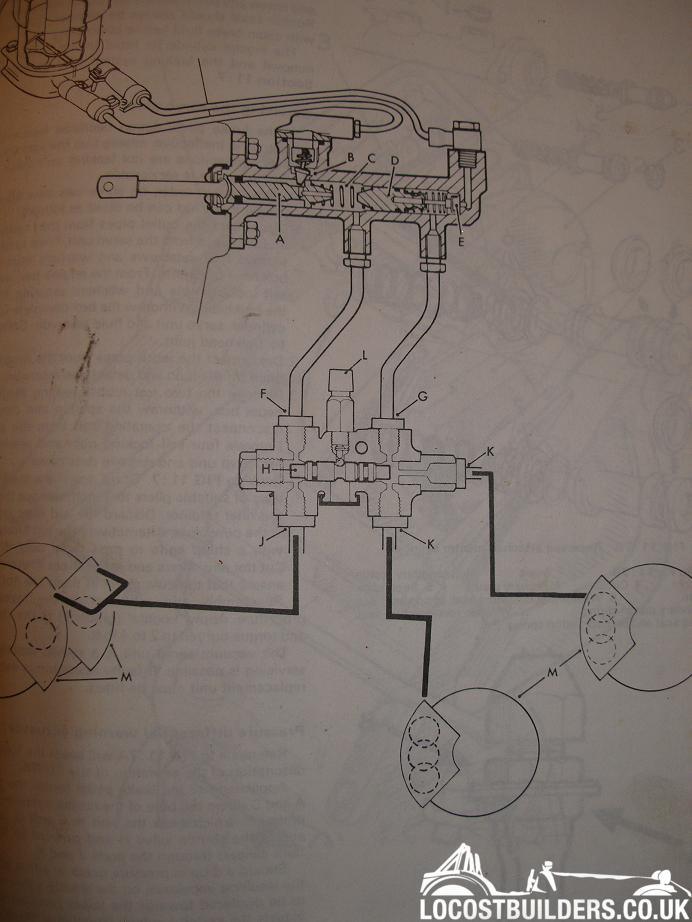
and a smaller secondary one - now the confusion that has created is that the diagram shows the Primary connected to the rear brakes and the secondary
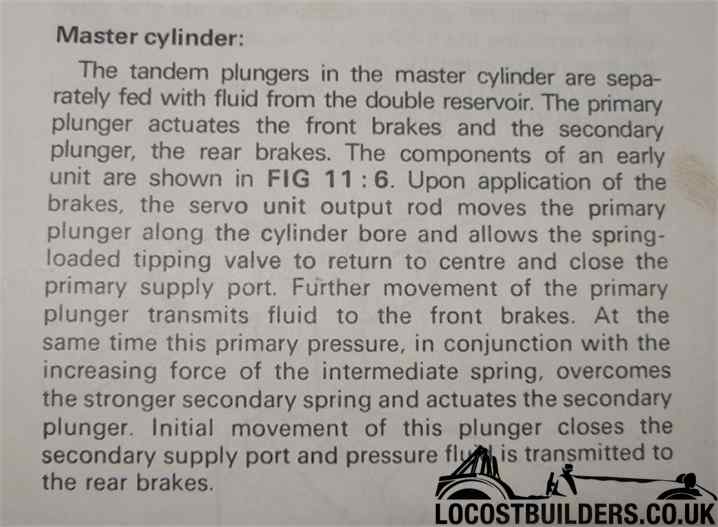
to the front - which is what I did originally - but reading the text, which I never did before, it says that the primary should be connected to the
front and the secondary to the rear brakes.
Which is right?
Describe the brakes on the car;
calipers on all four wheels?
How many pistons in each caliper?
Any idea of piston sizes?
Disc front and drum rear?
X-split system or front/rear split?
Plus a photo' or description of the master cylinder would be most helpful. Could you scan the pages from your manual?
The different master cylinder diameters usually mean that one half of the brake system is consuming a lot more brake fluid when you put your foot on
the brakes.
That would suggest something like big piston calipers on the front and drums on the rear or multi-piston calipers on the front and single piston
calipers on the rear perhaps?????
[Edited on 16/7/12 by JAG]
Don't have any piston sizes at hand as car is at Racetech in the Strand but typical XJ6 - Discs all round with three pistons in front (i.e two on
one side of the calliper and one on the other) and two pistons on rear - ie one on each side of the calliper. Will add some photos later but it is a
typical tandem MC with larger primary bore at the back and smaller secondary bore in front with the secondary piston being driven by hydraulic
displacement/pressure from the primary piston.
I am pretty sure that the rear brakes have a smaller piston area than the front ones.
Here are the photos of the relevant parts of the manual.