zxrlocost
|
| posted on 23/4/07 at 12:15 PM |

|
|
what is shock load
hi
just been reading about some other donor parts on different cars
and one goes on about shock load might brake the ball joint or something and it may need turning upside down
why would it brake the ball joint in a 7 stlye car but not in the car it was designed for????????

|
PLEASE NOTE: This user is a trader who has not signed up for the LocostBuilders registration scheme. If this post is advertising a commercial product or service, please report it by clicking here.
|
|
|
MikeRJ
|
| posted on 23/4/07 at 12:22 PM |
|
|
Difficult to say without some context, e.g. what ball joint are we talking about? It might be that the loads are being placed through the balljoint
in the wrong direction when used in a 7 style front suspension.
|
|
|
Mr Whippy
|
| posted on 23/4/07 at 12:25 PM |
|
|
I think it depends on if the ball is being forced in to the socket or pulled out.
I doubt a 7 could generate those loads without major damage to the rest of the car.
A Cortina lower is in the correct direction and a mighty beast anyway and the transit track rod upper is also the correct way round and again is more
than ample size plus it see's little load anyway as it's not taking the spring load.
[Edited on 23/4/07 by Mr Whippy]
|
|
|
nick205
|
| posted on 23/4/07 at 12:32 PM |
|
|
If you consider the standard Transit drag link or track rod end that's usually used on the top front wishbone. In it's intended
application, the greatest force (and shock load) is applied to it axially along the threaded section. In the 7 suspension application the greatest
force (and shock load) is applied to it in sheer across the section of the threaded part. Too high a shock load could cause the part to shear, most
likely through the threaded section.
You could argue that weight of a 7 is so much lower than that of a transit that the part ahould be OK. However IMO the unsprung mass (upright, wheel,
brake caliper, cycle wing and bracket etc.) that the part is dealing with is probably the same or heavier than in the Transit application and this is
what will affect the shcok loading more.
That said, the number of cars on the road and track and lack of part failure (that I'm aware of anyway) suggests it must be up to the job.
This is my take on it by the way.
|
|
|
Mr Whippy
|
| posted on 23/4/07 at 12:40 PM |
|
|
looking at fords figures the average transit has a maximum weight around 5 times the weight of a 7, I have little concern about the upper balljoint.
Like I said, other parts would fail before that did.
[Edited on 23/4/07 by Mr Whippy]
|
|
|
02GF74
|
| posted on 23/4/07 at 12:41 PM |
|
|
dunno if anyone has aver taken a balljoint apart but I did with an old landrover one.
there is a ball, as you may expect that goes through a hole in a housing - with the threaded part sticking out.
A spring fits agaisnt the ball and a cover is press fitted to the seal the whole lot.
I can see that is it possible to push the cover out but all that would happen is the joint is not longer spring loaded so may be a bit floppy.
the other type of failure being the inner part pulled through the housing - that should take a huge amount of force and probalbly in thgsoe condition
woudl be the least of your worries.
now what was the question again?
|
|
|
zxrlocost
|
| posted on 23/4/07 at 12:51 PM |
|
|
the ones in question were rover metro
|
PLEASE NOTE: This user is a trader who has not signed up for the LocostBuilders registration scheme. If this post is advertising a commercial product or service, please report it by clicking here.
|
Mr Whippy
|
| posted on 23/4/07 at 01:08 PM |
|
|
your still not going to break it, I bet it'll take 10 tonnes easy. At which point your wishbones will have already severed from the car...
|
|
|
nick205
|
| posted on 23/4/07 at 03:09 PM |
|
|
My point on the Transit drag link was that the forces are acting in a different way to the original application. As a steeing link, the forces are
limited to sideways or horizontal movement. In a 7 suspension set-up, the forces are up, down and side to side.
As Above I don't question the suitability of the component for use in 7 suspension as it seems very well proven.
02GF74 - I've taken one apart too and found the same (Pug 205 TRE). Thinking abbout the vertical forces acting on it in a 7 set-up, this means
the spring in the assembly may give rise to some unwanted movement in the suspension even when working correctly. I guess properly rated rod end
joints are the answer to that one though.
|
|
|
gazza285
|
| posted on 23/4/07 at 03:42 PM |
|
|
The top wishbone does move up and down, but there is very little resistance to that movement, so a very low risk of damage. In it's original
application it still had to move up and down as well, with a lot more weight hanging on it. The main forces on the Transit drag link are still on the
same plane as the one it was designed for. I wouldn't worry about it.
DO NOT PUT ON KNOB OR BOLLOCKS!
|
|
|
Confused but excited.
|
| posted on 23/4/07 at 04:11 PM |
|
|
Glad that's cleared up.
I thought it was when you tw@tted your thumb with the hammer! 
Tell them about the bent treacle edges!
|
|
|
MikeRJ
|
| posted on 23/4/07 at 09:26 PM |
|
|
quote:
Originally posted by gazza285
The top wishbone does move up and down, The main forces on the Transit drag link are still on the same plane as the one it was designed
for.
They aren't in the same plane. In a steering application the threaded section would only ever be loaded in tension or compression. On the
locost the forces on this thread can be in shear and in bending, which is not a great idea as threads are great stress raisers.
It's clearly up to the task on a locost, but the designs I have seen that put suspension loads through them scare me (e.g. one of the Cobra
replicas, and I think some of the RH's had this setup)/
|
|
|
NS Dev
|
| posted on 24/4/07 at 11:48 AM |
|
|
quote:
Originally posted by nick205
My point on the Transit drag link was that the forces are acting in a different way to the original application. As a steeing link, the forces are
limited to sideways or horizontal movement. In a 7 suspension set-up, the forces are up, down and side to side.
As Above I don't question the suitability of the component for use in 7 suspension as it seems very well proven.
02GF74 - I've taken one apart too and found the same (Pug 205 TRE). Thinking abbout the vertical forces acting on it in a 7 set-up, this means
the spring in the assembly may give rise to some unwanted movement in the suspension even when working correctly. I guess properly rated rod end
joints are the answer to that one though.
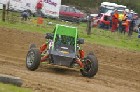
I have used transit drag links top and bottom on my grasser for 4 years. (the same ones)
I have hit the armco barrier hard enough to trash a front wheel, and also another car hard enough to smash the front rim as well, and the balljoints
are still fine, never touched em.
Retro RWD is the way forward...........automotive fabrication, car restoration, sheetmetal work, engine conversion
retro car restoration and tuning
|
|
|
MikeRJ
|
| posted on 24/4/07 at 12:34 PM |
|
|
quote:
Originally posted by NS Dev
I have used transit drag links top and bottom on my grasser for 4 years. (the same ones)
That doesn't count, the front wheels are hardly ever touching the ground
|
|
|