saigonij
|
| posted on 1/5/05 at 12:13 PM |

|
|
Brakes - First Test Run
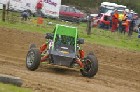
We took the velocity out on its first run yesterday - just up and down a private road with me hanging on to the battery.
One thing we noticed is that the rear wheels locked up long before the fronts locked up, which is NOT good.
We are using sierra read discs and calipers, front sierra ( 260 ) discs and calipers and the two master cylinders supplied in the Gold Pedal package
from Luego.
I cant remember the sizes, but they are something like 0.7 and 0.625 or something like that.
Can anyone tell me
1) which m/c should be used for fronts and backs
2) why my backs are locking before the fronts
3) can the luego pedal box with its balance bar be set up to prevent this? There were no instructions.
Thanks,
|
|
|
|
|
gazza285
|
| posted on 1/5/05 at 12:36 PM |
|
|
Use the larger sized M/C on the rear. The balance bar should adjust the bias, move the pivot point of the bar towards the M/C that you want to provide
more braking force.
|
|
|
britishtrident
|
| posted on 1/5/05 at 02:07 PM |
|
|
IMPORTANT NOTE
When using a balance bar the side clearance between the tube welded to the pedal and the adjuster should be 0.5 to 0.6mm (0.020 to 0.025" in
old money). If this isn't set correctly in the unlikely event of a circuit failure you will end without any hydraulic brakes.
|
|
|
bigandy
|
| posted on 1/5/05 at 09:22 PM |
|
|
Britishtrident:
could you just explain the reasoning behind that important note please? I'm just wondering exactly what you mean, and as I am using pretty much
an identical braking set up, I'd hate to have no brakes in an emergency. I think it is probably my inquisitive mind wanting to understand how
and why etc etc.
I can see the reason for the clearance (i/e to stop any binding during operation), but what exactly happens if the rear brake circuit fails, and there
is more clearance for example (or less clearance for that matter!)
I'm not having a go or anything, just wanting understand the importance of the clearance of 0.5mm!
Cheers
Andy
Dammit! Too many decisions....
|
|
|
NS Dev
|
| posted on 2/5/05 at 07:18 AM |
|
|
If the clearance is set (roughly I might add) to what britishtrident quoted, then, (and it's very crude) if one circuit fails, the bar goes
diagonal (the failed circuit's cylinder will just push right in) and "locks" against the side of the adjuster tube. This is why
washers are commonly used each side of the tube, to act as a bit of a bearing if this happens, to stop damage to the tube.
|
|
|
saigonij
|
| posted on 2/5/05 at 08:48 AM |
|
|
We have DOHC sierra brakes all round, so thats
Fronts : 260mm dicsc with 60mm piston calipers
Rears : 253mm discs with 43mm piston calipers
Im sure we have the 0.625 fitted to the front circuit, and the 0.7 fitted for the rears, but this still does not make sense to me.
As well as pressure, is there not a certain amount of fluid that has to be moved in order to apply force on the caliper piston, and hence on the
pads?
If the rears have smaller caliper pistons than the fronts, but a larger bore m/c, does this not mean that they will be "fully primed and
read" way before the 60mm pistsons on the front?
I was also wondering if it was a goot idea to run a deceleration valve from a sierra to stop the rears locking up.
|
|
|
Peteff
|
| posted on 2/5/05 at 09:36 AM |
|
|
Surely running a valve on it defeats the object of using twin cylinders in the first place by taking out the fine adjustment doesn't it? Sierra
brake valves don't do anything unless you have squishy Sierra suspension, you need a proper bias valve like mini or fiat ones.
yours, Pete
I went into the RSPCA office the other day. It was so small you could hardly swing a cat in there.
|
|
|
britishtrident
|
| posted on 2/5/05 at 10:29 AM |
|
|
quote:
Originally posted by Peteff
Surely running a valve on it defeats the object of using twin cylinders in the first place by taking out the fine adjustment doesn't it? Sierra
brake valves don't do anything unless you have squishy Sierra suspension, you need a proper bias valve like mini or fiat ones.
Sierra vavle is a "G" valve works by the G force generated durring braking, suspension dive has little effect on it.
Mini valve is a simple pressure shut off valve very crude and needs a stronger spring fitted to be of any real use as the existing spring is far too
light and becomes coil bound with even a small ammount of adjustment, In the original fitting the Fiat valve was a load sensing valve but I am not
sure if the valve itself is a shut off or proper proportioning type --- I suspect the latter, Rover 214/414 has a dual proportioning valve but it is
intended for a diagonal split system.
|
|
|
britishtrident
|
| posted on 2/5/05 at 10:59 AM |
|
|
I crunched some numbers-- by my figures with the 0.625" master cylinder connected to the front circuit and the 0.7" on the rear circuit
assumming the balance bar is set dead central with the correct clearance and the same pad material front and rear the split works out around #72%
front #28% rear which should be close to OK.
Start by checking the .7" master cylinder is on the rear circuit and the balance bar is set central and has .5mm clearance.
Normally the balance bar should not have to be adjusted more than 2 or 3 turns from dead centre.
[Edited on 2/5/05 by britishtrident]
[Edited on 2/5/05 by britishtrident]
|
|
|