PAULD
|
| posted on 24/3/07 at 10:58 AM |

|
|
Aquaplaning
I've just read an article (Honest John, Telegraph Motoring) that states that "a wheel will aquaplane at a speed approximating to nine
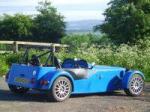
times the square root of the tyre pressure".Running at 18 psi in my locost this works out at 39 mph. Does anyone out there know if it really is
as simple as this formula (presumably, when using the formula all other conditions (tread, etc) must be ideal) or is there more to it.
|
|
|
|
|
smart51
|
| posted on 24/3/07 at 11:00 AM |
|
|
My first car was a citroen AX and it would aquaplane at 0 MPH. Seriously, there wasn't a speed at which the front wheels would lock up on a wet
road. In the dry it was great. The steering was full of feel and it was quick for its engine size but in the wet...
|
|
|
Hellfire
|
| posted on 24/3/07 at 11:00 AM |
|
|
Of course it's not... a wheel doesn't aquaplane at all, a tyre does.
Seriously though - it depends on the tread depth, design, road surface etc etc... if it were really that simple tyre companies wouldn't spend
millions designing new treads...
IMHO
Steve
|
|
|
scottc
|
| posted on 24/3/07 at 11:11 AM |
|
|
why would it be related purely to tyre pressure?
|
|
|
PAULD
|
| posted on 24/3/07 at 11:14 AM |
|
|
I appreciate that tread and road quality affect aquaplaning, but assuming these are as good as possible is it really as simple as that formula?
|
|
|
blakep82
|
| posted on 24/3/07 at 11:25 AM |
|
|
he did say 'approximatly'
________________________
IVA manual link http://www.businesslink.gov.uk/bdotg/action/detail?type=RESOURCES&itemId=1081997083
don't write OT on a new thread title, you're creating the topic, everything you write is very much ON topic!
|
|
|
BenB
|
| posted on 24/3/07 at 12:11 PM |
|
|
quote:
Originally posted by blakep82
he did say 'approximatly'
Yup- +/- 50mph 
|
|
|
MikeRJ
|
| posted on 24/3/07 at 12:50 PM |
|
|
That is apparently a general guideline that the aviation industry made from their studies according to http://www.sheldonbrown.com/tires.html
I'm sure it works at a very approximate level as the contact patch reduces as tyre pressure increases, so the tyre has less water to move and
the contact patch is exterting more force per unit area to move that water.
|
|
|
jlparsons
|
| posted on 24/3/07 at 12:57 PM |
|
|
surely the weight of the car would be very important in this sort of equation?
Any resemblance to real persons, living or dead is purely coincidental. Some assembly required. Batteries not included. Contents may settle during
shipment. Use only as directed. No other warranty expressed or implied. Do not use while operating a motor vehicle or heavy equipment. Subject to
approval, terms and conditions apply. Apply only to affected area. For recreational use only. All models over 18 years of age. No user-serviceable
parts inside. Subject to change. As seen on TV. One size fits all. May contain nuts. Slippery when wet. For office use only. Edited for television.
Keep cool; process promptly.
|
|
|
Ivan
|
| posted on 24/3/07 at 03:29 PM |
|
|
I would gues that by tyre pressure he meant the Wieght on that wheel devided by the tyre contact area in sguare inches.
|
|
|
JoelP
|
| posted on 24/3/07 at 04:24 PM |
|
|
it would be a VERY rough approximation that. Other factors that would be crucial would surely be the amount of standing water, width of tyre and
weight of car. There are loads of lesser variables but those above would have a significant effect on the result.
|
|
|
geoff shep
|
| posted on 24/3/07 at 08:13 PM |
|
|
Yes 9rootp is the aquaplane speed but its in knots - nautical miles per hour - so you've actually got about 44mph!
|
|
|
blueshift
|
| posted on 25/3/07 at 01:49 PM |
|
|
Doesn't that assume a standard design of tyre in aviation or something?
I can run low profile wider tyres on the car at higher pressure and have a lower aquaplaning speed. that doesn't fit the formula.
|
|
|
smart51
|
| posted on 25/3/07 at 02:00 PM |
|
|
When aquaplaning, the front of the tyre's contact patch is lifted up off the road by the water. The faster you go, the more tyre is lifted up.
If you have wide tyres, the contact pactch is short but wide, if you have narrow tyres, the contact patch is narrow but long, for the same tryre
pressure and vehicle weight. aquaplaning is widely said to be worse on wide tyres than narrow ones.
|
|
|