AdamR
|
| posted on 21/12/08 at 12:24 PM |

|
|
Battery earth wiring
What's the consensus on the following options:
1) Battery earth wired to chassis; chassis to engine earth strap to earth engine
2) Battery earth wired to engine; chassis to engine earth strap to earth chassis
The first option is easiest/neatest to do, but I've got a hazy memory about having read something suggesting the engine should be earthed
directly to the battery....
|
|
|
|
|
mookaloid
|
| posted on 21/12/08 at 12:30 PM |
|
|
I'd go for option 1 myself - as long as the connections are good, there should be no advantage to using option 2.
With 1 if the engine earth strap breaks, the car won't start. With option 2 all the electrics could go if the earth strap breaks
Cheers
Mark
"That thing you're thinking - it wont be that."

|
|
|
David Jenkins
|
| posted on 21/12/08 at 12:59 PM |
|
|
I have a threaded post welded into the chassis, where the battery -ve and engine earthing strap are bolted down. So Option 1 was my choice! 
|
|
|
MikeRJ
|
| posted on 21/12/08 at 01:05 PM |
|
|
quote:
Originally posted by mookaloid
I'd go for option 1 myself - as long as the connections are good, there should be no advantage to using option 2.
With 1 if the engine earth strap breaks, the car won't start.
It won't start but it may well melt control cables etc. However, virtually all production cars I have ever seen use this method.
The advantage to option 2 is that you minimise any voltage drops to the starter motor.
|
|
|
rusty nuts
|
| posted on 21/12/08 at 01:19 PM |
|
|
I agree with Mike , option 2 although both work
|
|
|
mookaloid
|
| posted on 21/12/08 at 02:17 PM |
|
|
quote:
Originally posted by MikeRJ
quote:
Originally posted by mookaloid
I'd go for option 1 myself - as long as the connections are good, there should be no advantage to using option 2.
With 1 if the engine earth strap breaks, the car won't start.
It won't start but it may well melt control cables etc. However, virtually all production cars I have ever seen use this method.
The advantage to option 2 is that you minimise any voltage drops to the starter motor.
Also true 
Maybe the real answer is - have several earth straps/chassis connections so that if one breaks you are still ok
Cheers
Mark
"That thing you're thinking - it wont be that."
|
|
|
AdamR
|
| posted on 21/12/08 at 02:51 PM |
|
|
quote:
Originally posted by MikeRJ
The advantage to option 2 is that you minimise any voltage drops to the starter motor.
Why would there be a bigger voltage drop? Surely the chassis is just as good a conductor as a battery cable?
|
|
|
Macbeast
|
| posted on 21/12/08 at 04:04 PM |
|
|
In Option 2 there is only one joint in the battery to starter feed - in Option 1 there are two.
|
|
|
coozer
|
| posted on 21/12/08 at 05:41 PM |
|
|
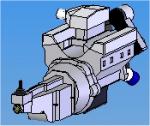
I used the Sierra battery cables unmolested.
There is a short strap earth that comes off the battery and is attached to the chassis above the battery, (footwell for me) The standard earth is
bolted to this and is the same length as the starter live cable so goes down to the starter and is bolted to the engine
block..JPG)
1972 V8 Jago
1980 Z750
|
|
|
speedyxjs
|
| posted on 21/12/08 at 06:07 PM |
|
|
quote:
Originally posted by MikeRJ
quote:
Originally posted by mookaloid
I'd go for option 1 myself - as long as the connections are good, there should be no advantage to using option 2.
With 1 if the engine earth strap breaks, the car won't start.
It won't start but it may well melt control cables etc. However, virtually all production cars I have ever seen use this method.
I have had experience of this. I can tell you, it is NOT fun trying to drive a car with a basically welded throttle cable 
How long can i resist the temptation to drop a V8 in?
|
|
|








.jpg)