nitram38
|
| posted on 4/4/09 at 01:06 PM |

|
|
Anyone running electric reverse on a bec?
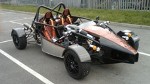
On the motaleira I wanted an electric reverse. I wired mine so that the reverse starter solenoid cannot be engaged unless the engine was in neutral
via a seperate relay.
The main battery lead has been run from the battery at the front of the car via the fia switch (large 25mm cable) and terminates on the reverse
starter.
From there the smaller cable goes to the R1 starter solenoid and engine loom feed.
The problem is that although in neutral with the engine running, the engine dies when I engage the reverse.
Anyone know why this is killing the engine? Too high a current?
I thought the alternator would sustain the engine while the battery ran the reverse.
I am thinking of putting another solenoid in the R1 cable so that when the reverse is engaged, it disconnects the battery from the engine.
Will the R1 still run without a battery connected?
I'm also worred about damaging the alternator if the battery is disconnected.
[Edited on 4/4/2009 by nitram38]

|
|
|
|
|
cloudy
|
| posted on 4/4/09 at 01:10 PM |
|
|
Simple test would be to run the starter off a seperate battery, It's a pain i'm sure but lets you know if its a voltage drop, or a wiring
issue... If its a voltage drop you may need a "proper" motor controller in there, to smooth that current spike
Another thing you could try is jumping a secondary battery over yours with decent leads, this will reduce the voltage drop as the starter engages...
James
[Edited on 4/4/09 by cloudy]
www.warnercars.com
|
|
|
nitram38
|
| posted on 4/4/09 at 01:16 PM |
|
|
I think a solenoid disconnecting the engine is the easiest and lighter option!
|
|
|
cloudy
|
| posted on 4/4/09 at 01:20 PM |
|
|
My worry would be damage to the regulators/ECU over long period, but it would seem the simplest solution... I'd first make sure you are not
disconnecting the ECU by accident or something during the reverse pulse!
James
www.warnercars.com
|
|
|
nitram38
|
| posted on 4/4/09 at 01:40 PM |
|
|
quote:
Originally posted by cloudy
My worry would be damage to the regulators/ECU over long period, but it would seem the simplest solution... I'd first make sure you are not
disconnecting the ECU by accident or something during the reverse pulse!
James
No, the engine wiring is completely seperate from the main loom and the starter solenoid.
The only common connection is the battery feed.
|
|
|
adithorp
|
| posted on 4/4/09 at 01:42 PM |
|
|
Does it work if you hold revs on the engine?
adrian
"A witty saying proves nothing" Voltaire
http://jpsc.org.uk/forum/
|
|
|
nitram38
|
| posted on 4/4/09 at 01:50 PM |
|
|
quote:
Originally posted by adithorp
Does it work if you hold revs on the engine?
adrian
No, tried that. It kills the engine instantly.
I tried reversing the car today about 70 yards and the reverse slowed to a stop.
Not enough in the battery to run it for too long, but enough left to restart the engine easily!
I am trying not to have to change the battery for a bigger one as I don't have the space.
It is is a brand new oddesey (equivalent to redtop 25?). and is topped up/conditioned on a ctek 3600 charger while standing.
|
|
|
adithorp
|
| posted on 4/4/09 at 02:35 PM |
|
|
Sounds like somehow you're back feeding the start inhibit relay and thats killing the engine. If it was just load on the charging system
I'd expect it to be ok with revs.
Try the disconecting the relay/circuit you've got in to make it only run in neutral and then try it.
adrian
"A witty saying proves nothing" Voltaire
http://jpsc.org.uk/forum/
|
|
|
nitram38
|
| posted on 4/4/09 at 04:16 PM |
|
|
quote:
Originally posted by adithorp
Sounds like somehow you're back feeding the start inhibit relay and thats killing the engine. If it was just load on the charging system
I'd expect it to be ok with revs.
Try the disconecting the relay/circuit you've got in to make it only run in neutral and then try it.
adrian
I know what you are saying but the relay coil is working correctly in that it energises when I am in neutral anyway (reverse starter or not) and it
does not stop the engine. The starter control feed is just switched through the relay from a seperate fused supply.
There is no aditional load on the neutral control to the relay when the starter switch is energised, that could cause a back feed to the inhibitor
circuit.
I think it comes down to battery size.
At worst I can live with it because I am more likely to be only reversing out of the odd parking bay and I can do that with the engine off.
I just wondered if anyone else had experienced it.
[Edited on 4/4/2009 by nitram38]
|
|
|
scudderfish
|
| posted on 4/4/09 at 05:14 PM |
|
|
When you energise a stationary electric motor, you are effectively short circuiting the feed until it starts to spin. If the motor is a beefy one,
the initial current draw/voltage drop could be quite high which then kills the ECU. I used to have a dodgy battery that would get in a borderline
state where cranking the engine caused the ECU to reset.
You might need some sort of soft start to limit the inital draw of the motor until it is spinning.
|
|
|
rf900rush
|
| posted on 4/4/09 at 06:11 PM |
|
|
hi Martin
Don't even think about running your reverse motor with the battery dissconected.
I've used a simular motor to make an electric go-kart, an it used in excess of 200amps.
Not event a decent car alternator will run the sort of power.
A decent battery may help.
I got hold of a Oddessy PC680 (16a/h) which claims 680Amps cold start.
Simular size to a bike battery but twice as heavy.
Martin
|
|
|
nitram38
|
| posted on 4/4/09 at 06:20 PM |
|
|
I wasn't suggesting disconnecting the battery from the reverse starter. I was suggesting disconnecting the engine electrics from the
battery/electric reverse circuit so that the battery supplied the reverse starter only while engaged and the alternator keeps the engine running.
I am using the oddessey 680 battery
|
|
|
rf900rush
|
| posted on 4/4/09 at 06:37 PM |
|
|
Hello again.
When running a alternator the battery acts as a reservoir.
Without it you may well get excessive voltage peaks.
In the old days of points/coil wasn't a problem.
Mordern elctronics if a different ball game.
So isolating the battery for the bike electrics may damage ECU's etc.
It might be worth checking things like your Voltage drop on the battery and if any of the Bikes safety features are being affected, like the
neutral.
Could try your setup with the motor disconnected. This will prove if it's a wiring problem or volts drop.
Martin
|
|
|
nitram38
|
| posted on 4/4/09 at 06:48 PM |
|
|
Not sure what you mean about the motor disconnected?
The engine runs with the reverse off. The reverse works with the engine off.
If I engage reverse with the engine running (neutral gear), the engine dies.
The only other option I can see is a split charge relay and second battery, but that means more weight.
|
|
|
rf900rush
|
| posted on 4/4/09 at 08:36 PM |
|
|
Hi
When I say disconect the motor, I mean to run the reversing system but without power reaching the motor, to see if you relays and switches stops the
engine, rather than the power drain from the reverse motor.
As I'm not good at explaining myself in writing, PM me with tel. no. if you still not sure what I mean.
Martin
|
|
|
nitram38
|
| posted on 4/4/09 at 08:41 PM |
|
|
I can disconnect the main lead to the starter, but leave the solenoid connection on and try it.
|
|
|
cloudy
|
| posted on 4/4/09 at 08:50 PM |
|
|
Worth a go
www.warnercars.com
|
|
|
nitram38
|
| posted on 6/4/09 at 06:07 PM |
|
|
Just spoke to Jon at lynx ae who sold me the reverse.
It is definitely a battery capacity issue, plus the cable from the engine loom not going all the way back to the battery (looping off the reverse
starter).
He said that it is resetting the ecu and recommended a redtop 30.
|
|
|
cloudy
|
| posted on 6/4/09 at 06:19 PM |
|
|
so the ecu runs off the same run of cable to the rear as the starter?
What size is this cable?
James
www.warnercars.com
|
|
|
nitram38
|
| posted on 6/4/09 at 06:31 PM |
|
|
I thought it would be big enough at 25mm, considering that the bike is around 6-10mm.
Mainly it is the battery capacity.
For now I am not bothered. A bigger battery would mean a complete resizing of the alumium tub that contains it and the fusebox.
I am more likely to use it coming out of a parking space so that is easy enough to do before running the engine.
|
|
|
rf900rush
|
| posted on 7/4/09 at 04:31 PM |
|
|
Hi Martin
PC680 spec is
# 680 cranking amps for 5 seconds
# 595 cranking amps for 10 seconds
# 525 cranking amps for 20 seconds
# 17 amp hours
# Short circuit current over 1800A
Odyssey Linky
So , unless you try try to start your engine whilst in reverse it should cope.
I would look at running seperate leads to your battery, one for the starter and reverse and, one and the rest.
Don't forget you car has to run when cranking.
So I think it's likely to be a wiring issue.
Martin
|
|
|
cloudy
|
| posted on 7/4/09 at 04:34 PM |
|
|
Do you have a multimeter? Easy test is measure the voltage drop at the starter and battery during a stopped/stall condition...
James
www.warnercars.com
|
|
|
nitram38
|
| posted on 7/4/09 at 07:06 PM |
|
|
As Jon has told me, definitely run seperate cables, but it makes things a bit complicated as I prefer the fia switch (which is midway from the battery
to the rear of the car) to kill everything. He has already had this issue, even wired directly, until he fitted a red top 30 (the next size up.
I will sort it after sva as I am less than two weeks away. I'm not sure about changing the battery though as it means major work making space.
|
|
|
cloudy
|
| posted on 7/4/09 at 07:24 PM |
|
|
I think it's worth you finding what the problem is before chucking new parts at it, there are a loads of things you can do on a tempory basis
that'll give you more direction...
www.warnercars.com
|
|
|
nitram38
|
| posted on 7/4/09 at 07:28 PM |
|
|
It is the voltage drop resetting the ecu.
Looking at batteries £146 for an odyssey one, £178 for a redtop 
Another option is a seperate pc680 and split charger just for the reverse.
|
|
|