blakep82
|
| posted on 16/3/09 at 11:42 PM |

|
|
8mm microbore copper pipe
i think i remmeber reading on here its ok for fuel lines? just want to check before i spend money on something else which isn't right 
on compression fittings for heating, you et the olive, can you get these for microbore pipe too? is that the best way to get a good seal? i
haven't got any flaring tools, and propbably won't have any need to, so looking for alternative ways.
i've got 8mm rubber pipe already, so will this be ok to slip over the copper pipe and the olive?
________________________
IVA manual link http://www.businesslink.gov.uk/bdotg/action/detail?type=RESOURCES&itemId=1081997083
don't write OT on a new thread title, you're creating the topic, everything you write is very much ON topic!
|
|
|
|
|
Simon
|
| posted on 16/3/09 at 11:46 PM |
|
|
It's what I've done (but with 10mm pipe). Tested it on Sunday and no leaks.
If you do it and your car burns, I'll deny all knowledge of it
ATB
Simon
|
|
|
omega0684
|
| posted on 16/3/09 at 11:46 PM |
|
|
do you have enough rubber fuel pipe already, just use that, i run steal braided rubber fuel lines all the way from tank to fuel rail and back again.
|
|
|
Chippy
|
| posted on 16/3/09 at 11:47 PM |
|
|
Hi, yes the 8mm copper pipe is fine for use as a fuel line, I have it on mine, as do several hundred others, Just a point that may be of
interest, solder on some olives at the ends, makes a nice petrol tight fit, once you have jubilee'd the rubber pipe to it. Cheers Ray
To make a car go faster, just add lightness. Colin Chapman - OR - fit a bigger engine. Chippy
|
|
|
David Jenkins
|
| posted on 16/3/09 at 11:51 PM |
|
|
I found that domestic central heating pipe has a very thin wall - it kinks quite easily, and you can bend it when you push on some rubber tube (I did,
anyway).
I'm seriously thinking of replacing mine with 8mm Kunifer pipe at some time in the future. Alternatively, I might just put some steel conduit
up the tunnel and push some flexible tube through it.
|
|
|
blakep82
|
| posted on 16/3/09 at 11:52 PM |
|
|
quote:
Originally posted by omega0684
do you have enough rubber fuel pipe already, just use that, i run steal braided rubber fuel lines all the way from tank to fuel rail and back again.
ah, yes, i bought 5m ( i think) thinking this would be plenty to run from the fuel tank to the carbs, ti was something silly like £5.50 a metre or
something and yes i found it cheaper elsewhere later... but when running cables, 6m didn't go as far as expected... thought i'd be
better running some copper, which works out a lot cheaper, just down the tunnel, and using the rubber pipe everywhere else 
thinking about it, i only need a few metres if anyone has some to spare? say 4m to allow for mistakes?
it was just something i was thinking about, but david makes a good piont. it would be quite thin wall. i'll try running the pipe i've got
down there, if i need it longer i guess i can joing extra bits on with hose joiners.
[Edited on 16/3/09 by blakep82]
________________________
IVA manual link http://www.businesslink.gov.uk/bdotg/action/detail?type=RESOURCES&itemId=1081997083
don't write OT on a new thread title, you're creating the topic, everything you write is very much ON topic!
|
|
|
MikeR
|
| posted on 17/3/09 at 12:05 AM |
|
|
I've posted this many times......
Firstly i'll 95% likely to use copper pipe!
Mate used to design fuel systems for cars until he married a girl and moved.
Basically copper pipe is a no-no as the petrol reacts with the copper and something leaches out of the copper. Over time this will built up in places
like on injectors. On carbs you're more likely to be ok as the tolerances are bigger. This is why production cars never use copper fuel
lines.
Now the important question is how long will it take to mess up your car ? don't know. considering how many people have copper lines on their
cars we're probably ok due to limited mileage.
Just wanted to make sure you make an informed decision. As I said, i'll probably use copper when i get round to making my fuel lines despite
having 4 or 5 mini cooper fuel lines in my garage attic.
|
|
|
austin man
|
| posted on 17/3/09 at 12:06 AM |
|
|
im using 10 mm from wickes no problems in 2 years, werent b&q doing a tool to put a flare onto pipe ends ???
Life is like a bowl of fruit, funny how all the weird looking ones are left alone
|
|
|
omega0684
|
| posted on 17/3/09 at 12:15 AM |
|
|
quote:
ah, yes, i bought 5m ( i think) thinking this would be plenty to run from the fuel tank to the carbs, ti was something silly like £5.50 a metre
or something
JESUS THATS EXPENSIVE!  I think i only paid about £6/Metre for my braided hosing I think i only paid about £6/Metre for my braided hosing
|
|
|
gazza285
|
| posted on 17/3/09 at 05:57 AM |
|
|
So you paid more than he did.
DO NOT PUT ON KNOB OR BOLLOCKS!
|
|
|
David Jenkins
|
| posted on 17/3/09 at 07:40 AM |
|
|
quote:
Originally posted by MikeR
Basically copper pipe is a no-no as the petrol reacts with the copper and something leaches out of the copper. Over time this will built up in places
like on injectors. On carbs you're more likely to be ok as the tolerances are bigger. This is why production cars never use copper fuel
lines.
When I first heard this I did some research - there's quite a lot about it on the interwebbie...
The problem mainly happens in countries where the petrol is of poor quality and contains lots of sulphur. This reacts with the copper to form copper
sulphate that can eventually block pipes and may get into the carbs/injectors. This is probably the main reason why manufacturers don't use it.
Apparently (they say) in European countries and the USA the petrol is better refined and this problem just doesn't occur.
Hopefully.
The other reason is metal fatigue - if copper pipe is allowed to vibrate it will fracture, eventually. For people like us, with our limited mileage,
this is unlikely to be a problem. If you use Kunifer, then this problem goes away, near enough.
[Edited on 17/3/09 by David Jenkins]
|
|
|
britishtrident
|
| posted on 17/3/09 at 08:05 AM |
|
|
The other alternative is plastic polyflex pipe which is now geting very popular with the LPG conversion industry, but it is relatively expensive.
|
|
|
David Jenkins
|
| posted on 17/3/09 at 08:12 AM |
|
|
One thing I have considered is to run a steel conduit or tube through the tunnel, which would make the installation and/or replacement of a flexible
tube very simple. It would be quite easy to push that plastic tube through, for example.
It would also help to protect the fuel line if the propshaft let go... up to a point, anyway. It would certainly be stronger than copper or plastic,
anyway!
|
|
|
Guinness
|
| posted on 17/3/09 at 08:18 AM |
|
|
I bought a 1.5m length of 8mm aluminium pipe from B&Q. Put a slight bend in it and ran it from the diff, along the tunnel and up the sloping bit
where the gearbox should be. Put a few little grooves around the ends with a file to give the rubber hose / jubilee clip something to seal
against.
Rubber pipe from tank to filter to pump to inlet of pipe, then more rubber pipe from front of tunnel to carbs.
I wouldn't use rubber where it can't be regularly / easily inspected.
|
|
|
David Jenkins
|
| posted on 17/3/09 at 08:29 AM |
|
|
I'd be worried about using aluminium pipe - not only is it prone to work-hardening, it also age-hardens. Fine if it's in a race car that
gets a good looking-over frequently, but maybe not in a road car. IMHO, of course.
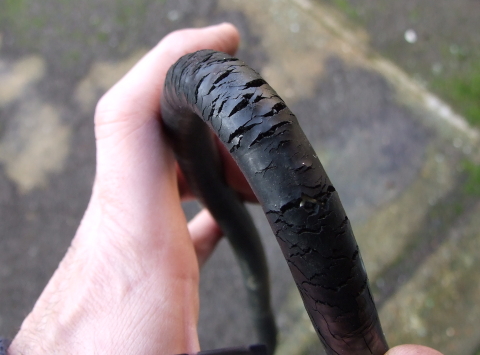
As for rubber pipe - here's one I took out of my car a year or two ago (it was about 4 years old):
|
|
|
Guinness
|
| posted on 17/3/09 at 08:46 AM |
|
|
quote:
Originally posted by David Jenkins
I'd be worried about using aluminium pipe - not only is it prone to work-hardening, it also age-hardens. Fine if it's in a race car that
gets a good looking-over frequently, but maybe not in a road car. IMHO, of course.
[Heads out to garage to inspect fuel pipe]
Mike
|
|
|
yellow melos
|
| posted on 17/3/09 at 11:45 AM |
|
|
The only time i have seen rubber pipe go like that is when somthing else has got on it ( like oil or LHM fluid )
i have had rubber fuel pipes on my car for over 6 years and it has not done that
|
|
|
David Jenkins
|
| posted on 17/3/09 at 12:04 PM |
|
|
That was the bit that went from the tank to the hard tubing through the tunnel - all it was exposed to was petrol on the inside, and road muck on the
outside.
I think it was dodgy quality hose, which I'd bought in a local motor factors. Possibly it was old spec stuff, not proof against modern unleaded
that has some nasty solvents in it such as benzine.
|
|
|
Dave Bailey
|
| posted on 17/3/09 at 03:03 PM |
|
|
I'm using 5/16th Kunifer with double olive fittings either end. Not tested it yet but should be o.k.
|
|
|
flibble
|
| posted on 17/3/09 at 03:21 PM |
|
|
Would stainless like
THIS be better
than copper, with some 8mm stainless hosetails welded to the end?
It's what I was considering for the undercar portion of my fuel lines.
Kev
|
|
|
David Jenkins
|
| posted on 17/3/09 at 05:20 PM |
|
|
quote:
Originally posted by Dave Bailey
I'm using 5/16th Kunifer with double olive fittings either end. Not tested it yet but should be o.k.
That's what I'll probably use the next time I go into the tunnel (sounds good...).
I'm also thinking of making some brass end fittings that can be bolted to the chassis, to reduce pipe flexing.
Just a pipe dream at the moment though.
|
|
|










.jpg)