MikeRJ
|
| posted on 6/1/12 at 01:08 AM |

|
|
quote:
Originally posted by BaileyPerformance
Agreed, the boost pressure is referenced to the carb(s) float chambers to the carb is effectively operating as normal (equalized pressure) if this
tube was not fitted the boost would push fuel back into the tank, but this does not help in any way to the air density issue..
A simple tapping from the inlet plenum would not provide any density compensation, but a Pitot tube
does.
If you check out the Wikipedia link, you will notice that the stagnation pressure of a Pitot tube is proportional to both the fluid density and
to the square of the fluid velocity. This implementation is widely used on blow through turbo installations on bikes for boost
compensation.
The restriction used in the Metro Turbo was simply another way of achieving the same goal. The terms work out to be the same, so the pressure drop is
still proportional to density and the square of the flow rate.
|
|
|
|
|
BaileyPerformance
|
| posted on 6/1/12 at 10:36 AM |
|
|
quote:
Originally posted by MikeRJ
quote:
Originally posted by BaileyPerformance
Agreed, the boost pressure is referenced to the carb(s) float chambers to the carb is effectively operating as normal (equalized pressure) if this
tube was not fitted the boost would push fuel back into the tank, but this does not help in any way to the air density issue..
A simple tapping from the inlet plenum would not provide any density compensation, but a Pitot tube
does.
If you check out the Wikipedia link, you will notice that the stagnation pressure of a Pitot tube is proportional to both the fluid density and
to the square of the fluid velocity. This implementation is widely used on blow through turbo installations on bikes for boost
compensation.
The restriction used in the Metro Turbo was simply another way of achieving the same goal. The terms work out to be the same, so the pressure drop is
still proportional to density and the square of the flow rate.
Hi, the metro turbo also used boost ref to float chamber, all blow-thru systems do, including XR2 turbo. I do see what you are saying, and understand
the science behind the pilot tube as appose to a basic ref, but after playing on the dyno i can confirm problems can arise at full throttle with SU
type carbs.(that i dont think would be fixed with a pilot tube system) I beleave a bike carb is effectively an SU (jet,needle, variable choke).
All i can think of is the actual issue is with the dashpot, under full throttle and under boost the dashpot is lifted with air, this air is created by
the pressure drop between the inlet and the outlet of the carb. At full throttle with no boost the pressure drop maybe greater than full throttle with
boost. As the position of the needle is controlled by the dashpot you can have a situation when the dashpot is lower under boost than it would be if
the same engine was NA. This can cause problems when attempting to get the AFR right at all driving conditions, you can end up with rich under boost,
and lean under cruse or vise versa. In ideal world the dashpost will reach full open when full boost is reached at high RPM.
At the end of the day if it CAN be tuned out then no problem, i'm just pointing out that some things are not obvious, you can change needles for
ever and not get it close.
|
NOTE:This user is registered as a LocostBuilders trader and may offer commercial services to other users
|
Craigorypeck
|
| posted on 6/1/12 at 01:23 PM |
|
|
The diaphragms are pressurized with equal boost above and below, with this not trick the carb into working as it normally would in NA operation??
ETA i was considering a perspex lid for the airbox so I could see in when I get it on the rollers, be interesting to see what the sliders are doing
and how far they are moving.
[Edited on 6/1/12 by Craigorypeck]
|
|
|
FASTdan
|
| posted on 6/1/12 at 04:24 PM |
|
|
Very interesting project, I like :-) would be even more interesting as you say if you could monitor how the carbs are behaving under boost.
NEW danST WEBSITE NOW LIVE! Bike carbs, throttle bodies and more......
http://www.danstengineering.co.uk/
|
NOTE:This user is registered as a LocostBuilders trader and may offer commercial services to other users
|
BaileyPerformance
|
| posted on 6/1/12 at 10:21 PM |
|
|
quote:
Originally posted by Craigorypeck
The diaphragms are pressurized with equal boost above and below, with this not trick the carb into working as it normally would in NA operation??
ETA i was considering a perspex lid for the airbox so I could see in when I get it on the rollers, be interesting to see what the sliders are doing
and how far they are moving.
[Edited on 6/1/12 by Craigorypeck]
The diaphragms are pressurized above and below via drillings in the carb body, but dont forget you are forcing air in, if the engine continues to
consume that air then the pressure below the diaphragms will be greater than the pressure above so choke will rise, but as RPM goes up, normally at
the point of max torque the engine will start to consume less air, so the pressure above the diaphragms can start to equal the pressure below, so the
choke starts to fall. What you need to do is get the chokes at full lift at max airflow (normally peak torque), this is why a slight restriction on
the inlet of each carb can help by causing a pressure drop across the carb, even under boost. In NA operation the pressure in the engine inlet
manifold is always lower (vacuum) than the atmos pressure so no problem!
If you could fit a window in your plenum you could see whats going on, would have to be on the dyno!
|
NOTE:This user is registered as a LocostBuilders trader and may offer commercial services to other users
|
Craigorypeck
|
| posted on 6/1/12 at 11:11 PM |
|
|
yes, makes sense, fine tuning will see if I need such an adaption, what sort of restriction you talking?
|
|
|
BaileyPerformance
|
| posted on 6/1/12 at 11:18 PM |
|
|
quote:
Originally posted by Craigorypeck
yes, makes sense, fine tuning will see if I need such an adaption, what sort of restriction you talking?
Well, hard to say, but at a guess a plate across the top of each carb inlet effectively blocking off the top 10mm should do it, you dont need much
otherwise power will suffer.
Have you got ram pipes on? if so i would prob remove them.
|
NOTE:This user is registered as a LocostBuilders trader and may offer commercial services to other users
|
Craigorypeck
|
| posted on 6/1/12 at 11:30 PM |
|
|
Yes, small trumpets, they are playing a part holding the carb/backing plate/airbox together..
theres some twin side draught trumpet meshes in the garage would they do the job if needed?
|
|
|
BaileyPerformance
|
| posted on 6/1/12 at 11:44 PM |
|
|
quote:
Originally posted by Craigorypeck
Yes, small trumpets, they are playing a part holding the carb/backing plate/airbox together..
theres some twin side draught trumpet meshes in the garage would they do the job if needed?
Depends on the mesh, somtimes the mesh can be a big restriction, as much as 50%, i've seen these wipe off great chunks of power on weber
DCOE's, but well worth a try in your installation!
The strip type restriction is how the metro turbo was done (cast within the SU inlet manifold thingy)
If you could do without the intercooler i would suggest you switch to a suck-thru system, much simpler to setup.
|
NOTE:This user is registered as a LocostBuilders trader and may offer commercial services to other users
|
Craigorypeck
|
| posted on 7/1/12 at 12:16 PM |
|
|
Hi Dale.. i'll try getting it right this way first!!
went a visit to the auto electrical shop today with the alternator to get a new rear bearing.. they had the same alternator on the shelf, brand new
items and guess what they have the same play in the rear needle bearing... so mine is ok, it must be completely down to the angle of the belt on the
pulley. most alts will have 180ish degrees of belt contact pulling the spindle tight within the bearing. mine has way less contact allowing it to
shake about causing my horrid vibrating sound.. ebay has a bearing set for £7 so I will change them anyways.
need to anchor another pulley in there now..
|
|
|
BaileyPerformance
|
| posted on 7/1/12 at 04:32 PM |
|
|
quote:
Originally posted by Craigorypeck
Hi Dale.. i'll try getting it right this way first!!
went a visit to the auto electrical shop today with the alternator to get a new rear bearing.. they had the same alternator on the shelf, brand new
items and guess what they have the same play in the rear needle bearing... so mine is ok, it must be completely down to the angle of the belt on the
pulley. most alts will have 180ish degrees of belt contact pulling the spindle tight within the bearing. mine has way less contact allowing it to
shake about causing my horrid vibrating sound.. ebay has a bearing set for £7 so I will change them anyways.
need to anchor another pulley in there now..
Hi, yep, got to be worth getting the blow thru setup right, your 90% there now!
I did a suck thru setup on an XR2 years ago, 1800 CVH, cosworth T3 turbo with 1 3/4 SU on inlet of turbo, 16PSI, went well.
Would think it would be the number of teeth on the pulley causing the problem, you need at least 4 in contact i imagine. as you say another idler
pulley would do it.
|
NOTE:This user is registered as a LocostBuilders trader and may offer commercial services to other users
|
Craigorypeck
|
| posted on 7/1/12 at 09:52 PM |
|
|
gonna attach an other deflection pulley to a new laser cut alternator top strap and run the belt up and over to get more contact to the alt.
|
|
|
Craigorypeck
|
| posted on 7/1/12 at 10:08 PM |
|
|
Just a random thought- Electronic BOVs? as my main problem with the crude setup i had was getting the boost to behave on cruise would a leccy BOV
controlled by a TPS output from my megajolt work? Basically any throttle movement however slight would have the bov shut and the engine under boost
with no fluttering and kangerooing that the reference vac/boost/bov spring were giving?
|
|
|
BaileyPerformance
|
| posted on 8/1/12 at 06:08 PM |
|
|
quote:
Originally posted by Craigorypeck
Just a random thought- Electronic BOVs? as my main problem with the crude setup i had was getting the boost to behave on cruise would a leccy BOV
controlled by a TPS output from my megajolt work? Basically any throttle movement however slight would have the bov shut and the engine under boost
with no fluttering and kangerooing that the reference vac/boost/bov spring were giving?
Hi Craig,
If i was you i wouldn't worry, you'll probably find when you have the throttle body installed and set up on the inlet of the blower the
boost surge problem will go away. Electronic BOV would be possible to do but over complicated.
I dont think you are going to get it sorted 100% without the SC inlet throttle, a have seen big V8s with roots type blows feeding EFI systems with the
throttle on the engine, they just use a big BOV the same as you have. These sort of setups are for race use only, boost surge is not an issue as the
engine is full throttle most of the time.
Cosworth / saab BOVs (Bosch, black plastic body) are designed to open softly, get your self one of these plumbed across SC with a throttle body on
the blower inlet. Zetec 2.0L may do it or better still 4.6L range rover.
Bosch dump valve = £10-20, Range Rover throttle body £30?? ebay.
|
NOTE:This user is registered as a LocostBuilders trader and may offer commercial services to other users
|
Craigorypeck
|
| posted on 8/1/12 at 08:53 PM |
|
|
I have one of these, 25mm/1" bypass

and 4 different strength springs should do the trick?
also one of these on the way from china too- nice and cheap!
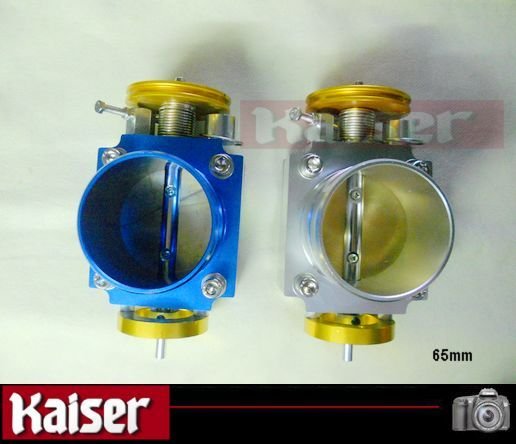
|
|
|
BaileyPerformance
|
| posted on 9/1/12 at 06:54 PM |
|
|
Perfect!! Should do the job!
|
NOTE:This user is registered as a LocostBuilders trader and may offer commercial services to other users
|
Craigorypeck
|
| posted on 27/1/12 at 12:49 AM |
|
|
solved the rattle with an extra pulley in the system, runs nice and quiet now.

BTW this guy- martinptownsend@aol.com laser cuts stuff from a cardboard templates at very reasonable prices, custom 15mm thick alt strap to mount
pulley on, £7.50 delivered. 
|
|
|