BenB
|
| posted on 23/11/06 at 04:09 PM |

|
|
Securing Lobro diff bolts
When I built my car initially Ian @ STM was very adamant they I cleaned the new Lobro (diff) bolts with solvent first and used loads of threadlock.
I had to remove the bolts again as they clamp on my speedo trigger wheel halves

I can confirm that they were well in place, they were a complete PITA to try and get turning again...
They got a bit soiled when being removed so I gave em a good clean with a clean rag (didn't have any thinners) and yet more threadlock... But
it appears I didn't do a very good job cleaning them because they've come undone. Presumably now the main problem is the threaded part of
the diff being greasy (after all, I can get new diff bolts)...
Last night went for a blat round Norf London and noticed that my speedo was reading about half speed- yet I'd calibrated at SVA to within an
inch of its life (or "spot on" as Mr SVA said).... Turns out most of the propshaft bolts had come undone and one of the trigger wheel
halves was flapping around, hence no signal from 50% of the trigger teeth (luckily it didn't nibble the end off my sensor)...
So....... other than tightening the bolts up to FT with a load of threadlock, or maybe replacing the bolts any ideas?? Is there any way of cleaning
the threaded part on the diff- I wondered about a cotton bud dipped in thinners or something...
|
|
|
|
|
RazMan
|
| posted on 23/11/06 at 04:12 PM |
|
|
Get some spray brake cleaner or carb cleaner - they have a good amount of whoosh to get in there. 
Cheers,
Raz
When thinking outside the box doesn't work any more, it's time to build a new box
|
|
|
BenB
|
| posted on 23/11/06 at 04:36 PM |
|
|
Good plan- high power squirty solvent. I like it
Will try!!
|
|
|
NS Dev
|
| posted on 23/11/06 at 04:44 PM |
|
|
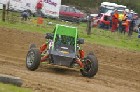
Yep, I use these on my grasser where they stand HUGE amounts of abuse, and I have heard many tales of them coming loose, but mine never have in 4
years of racing.
I use new bolts if they are undone, decent ones made by Unbrako, and I wash them in thinners before using, with just a dab of loctite on the threads,
and a LIGHT smear of grease under the head nip all 6 up lightly, then torque them up, USING A TORQUE WRENCH!!! to around 49 NM. This is a touch more
than the recommended torque value, but is what you will find if you do the optimum clamping force calculation longhand!
Following this, put a dab of tippex across from the head of each bolt to the outer of the cv joint. This will instantly show if they come loose in the
future as the tippex will crack clearly.
Also make sure before assembling that the faces of the cv joint and the drive flange are absolutely clean and rust and grease free and have no dings
in them (file any dings flush) and also use no washers with the bolts of any kind, they are much lower tensile than the bolts and will crush slightly
losing clamping force!
there you go, a very technical guide to tightening 24 bolts, but then I have never had one loosen, even with a welded up diff, so it must work.
[Edited on 23/11/06 by NS Dev]
Retro RWD is the way forward...........automotive fabrication, car restoration, sheetmetal work, engine conversion
retro car restoration and tuning
|
|
|
BenB
|
| posted on 23/11/06 at 04:49 PM |
|
|
Ahem... Yes, my torque wrench is still quite shiny....
FT all round!!! (except threaded ali e.g. sump drain bolts which I tend to be a bit kinder on)...
|
|
|
NS Dev
|
| posted on 23/11/06 at 04:52 PM |
|
|
sorry, just edited my post adding a few extra tips!
Retro RWD is the way forward...........automotive fabrication, car restoration, sheetmetal work, engine conversion
retro car restoration and tuning
|
|
|
jambojeef
|
| posted on 23/11/06 at 06:12 PM |
|
|
Or drill the heads and get the lockwire out?
|
|
|
craig1410
|
| posted on 23/11/06 at 09:49 PM |
|
|
Quick question on this subject:
My inner lobro's had little metal plates fitted originally which went under the bolts (in pairs I think). Are these required because I'm
not sure where I've put them... I will get some if they are important but thought I'd ask before going to the trouble.
Other thing to ask is what did you use to tighten them up? I managed to break a Halfords Professional allen socket (or whatever you call them) just
tightening mine to 32 lb-ft. Ironically I then finished off the rest using a Screwfix hex bit stuck in a small socket. I will of course be taking my
broken socket back to Halfords for replacement since it is guaranteed for life... I don't think they can complain that I was abusing it since I
was using a Halfords torque wrench at the lowest setting when it broke...
Cheers,
Craig.
|
|
|
NS Dev
|
| posted on 24/11/06 at 08:31 AM |
|
|
Firstly, lockwire is no use whatsoever on these. It may stop them falling out but they will still come loose, so don't waste your time with
trying to drill 12.9 capheads (cos you'll struggle to do that too!!!)
Next, that halfords bit must have been a freak failure, cos that is exactly what I use on mine (its done a good 15-20 lots of 24 bolts over the years!
) and has also done a set of them up to 68Nm after I incorrectly remembered the torque figure. This actually broke one of the bolts!
Take it back and get another, nowt wrong with halford pro tools, other than the unfashionable name!
Re. the little plates, I always bin them, again on numerous sets of these they have never been used by me.
[Edited on 24/11/06 by NS Dev]
Retro RWD is the way forward...........automotive fabrication, car restoration, sheetmetal work, engine conversion
retro car restoration and tuning
|
|
|